
In my last two posts I wrote about the word itself: why we chose Istishraf over ishraf, and why contracting begins by asking what the word evokes. Once the word feels safe, the next question follows: what do coaches in our region actually bring to the hilltop?
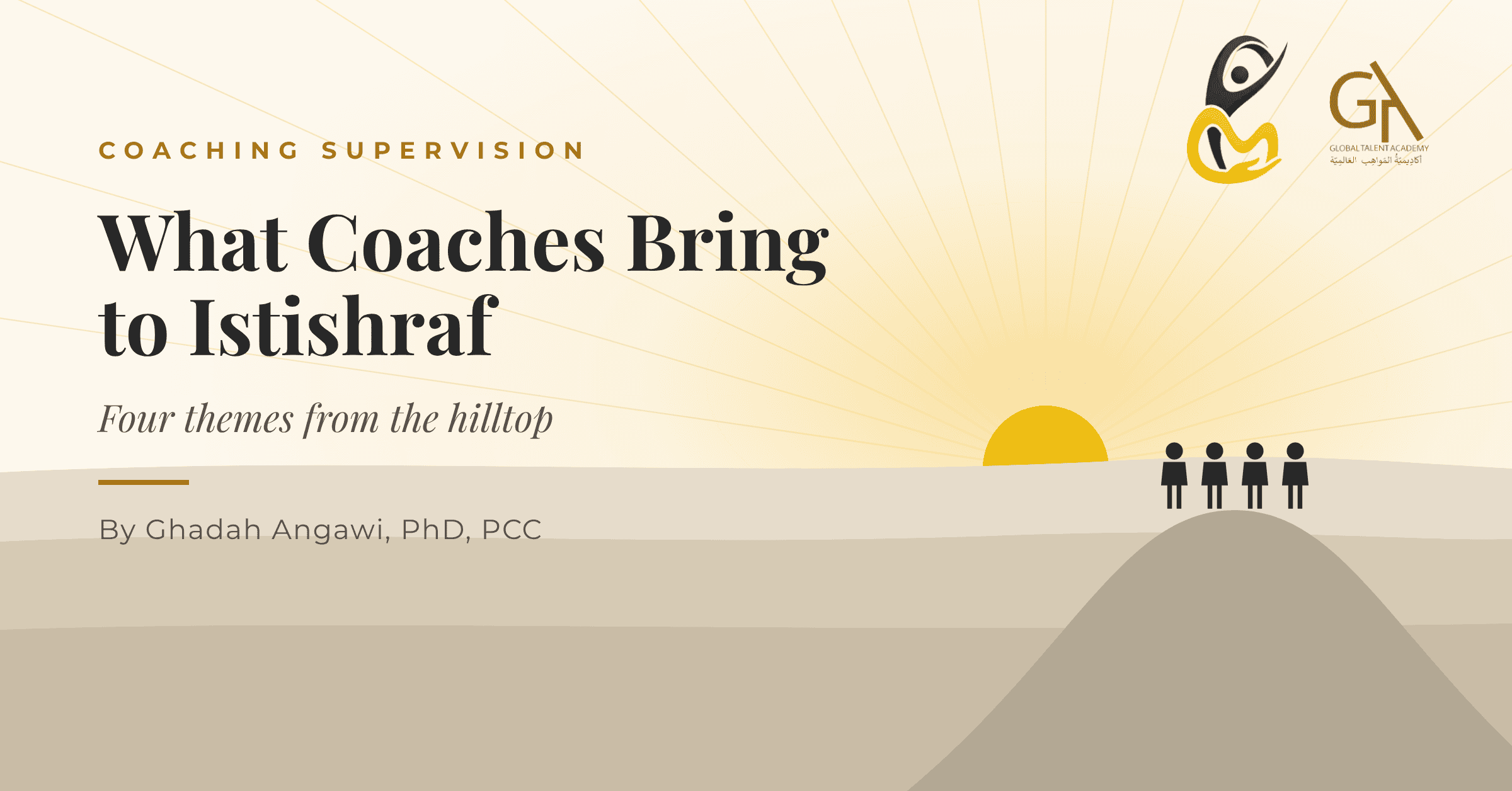
Four themes come up again and again:
- Small worlds, overlapping roles. In close-knit communities, the client may be a relative’s colleague or a familiar name from the same circles. Confidentiality is not only a clause in the contract; it is a daily practice.
- The sponsor in the room. When an organization pays, the coach often feels they work for the manager rather than the client. “Who is my client?” is one of the questions we look at together most often.
- Values the code does not name. Faith, family duty and hospitality shape what a coach will and will not do. We explore them openly, as the ground where ethical maturity grows, not as exceptions to be corrected.
- Borrowed models. Many coaches trained in English with models developed elsewhere, and quietly wonder whether these tools fit their clients. Istishraf gives room to adapt them without guilt.
From the hilltop, none of these is a problem the coach must solve alone. They are the landscape we look at together.
What do coaches bring to supervision where you work?
Istishraf is an ICF-accredited coaching supervision program (AACS), delivered in Arabic and English. The first cohorts start 15–18 March 2027. Learn more and register: www.neocharismaticleader.com/en/istishraf-en
Dr. Ghadah Angawi, PhD, PCC, ACTC, CSS, EIA, ESIA
#CoachingSupervision #Istishraf #CrossCulturalCoaching #ReflectivePractice #GlobalTalentAcademy #Leadership #ICF #الاستشراف_التوجيهي #استشراف #التوجيه